A useful home robot will need to work around people, recover from small mistakes, and finish a task without constant help. Those sound like basic requirements, but they cover the gap between a scripted demo and a machine you can live with.
For anyone weighing a future home robot, the test is practical: can it do a real job, at a fair cost, with safe limits and clear repair options?
Quick read
- A home robot needs a narrow job it can repeat well.
- Safe stopping matters more than a long feature list.
- The price must include setup, repairs, software, and power.
The useful robot starts with one job
Home robots will face uneven floors, loose cables, pets, children, doors, and objects left in the wrong place. A robot that works only when every item sits in a marked spot will need too much help for daily use.
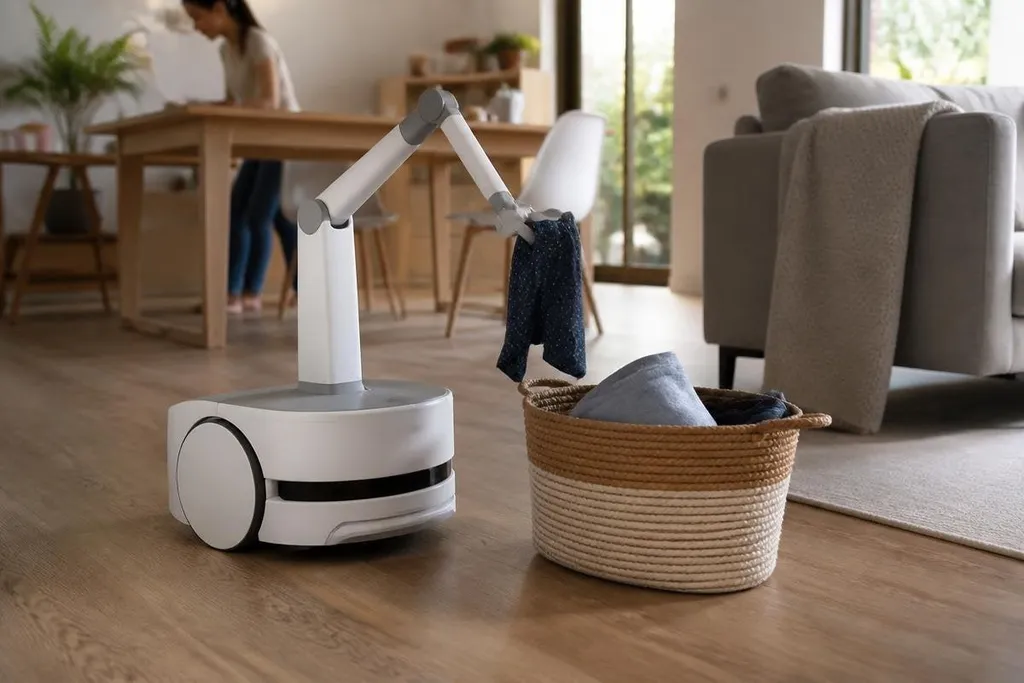
The better path is a machine built around a small set of tasks. That might mean carrying laundry between rooms, loading a dishwasher, or moving bins to a collection point. Each task has a clear result, so you can see where the robot works and where it stops.
This also makes testing easier. A maker can report how often the robot finishes a task, how long setup takes, and which objects cause failure. Without those details, a video tells you very little about home use.
A robot arm may pick up a cup in a clean demo. Your kitchen adds wet surfaces, thin handles, blocked paths, and items that weigh different amounts.
The machine needs sensors that detect its surroundings and software that can pause when the scene no longer matches its plan.
Safety has to work when the plan fails
A home robot will share space with people who aren't trained operators. Its safety system needs a clear stop button, a low force limit, and a way to lose power without dropping a load onto someone.
The physical design matters too. A heavy base may resist tipping, while a light arm can reduce the force of a bad movement. Rounded covers, guarded joints, and a slow mode near people can reduce the harm from mistakes.
You should also ask what happens after a sensor fails. Does the robot stop, or does it continue using an old map? Can you see the error and restart the task without a service visit? Those answers matter more than a claim that the robot uses artificial intelligence.
For a home robot, a useful report should name the model, task, test setting, and failure point. Look for those details in Robot 24 before you compare what the machine does with what it costs to own.
The price is more than the robot
A home robot's listed price won't tell you the full cost. You may also need a charging dock, a network connection, a service plan, replacement parts, and a person to set up new tasks.
Software matters after the sale. If the maker stops updates, the robot may lose access to bug fixes or new task support. A buyer needs a clear answer about offline operation, data storage, camera access, and how long parts will remain available.
The open question is labor. If you spend 20 minutes preparing a task and 10 minutes fixing failed attempts, the robot may add work instead of removing it. A maker should publish task success rates from homes, not only from controlled rooms.
A buying check for the next model
Use this list when a home robot reaches the market:
- Name the task: Write down the exact job you want done and how often it happens.
- Ask for failure data: Look for success rates, recovery steps, and tests with clutter.
- Check the stop system: Find the stop button, force limits, slow mode, and restart process.
- Price the full setup: Add the dock, service plan, power use, repairs, and installation.
- Check your data: Find out where camera and voice data go, and how to delete them.
- Plan for repair: Ask who fixes the robot and how long parts stay in stock.
I'd wait for public home trials before paying a large price for a general-purpose robot. A machine that handles one household task every day may be useful; a machine that promises to handle the whole house still has too much to prove.
The next models should publish task success rates, repair terms, and safety limits beside their videos. Those numbers will tell you when a home robot is ready for your floor.